

Sermorelin & GHRP-6 Blend – 10MG
$93.00
Discount per Quantity
| Quantity | 5 - 8 | 9 + |
|---|---|---|
| Discount | 5% | 10% |
| Price | $88.35 | $83.70 |
Scientific Overview of Sermorelin & GHRP-6 Peptide Blend
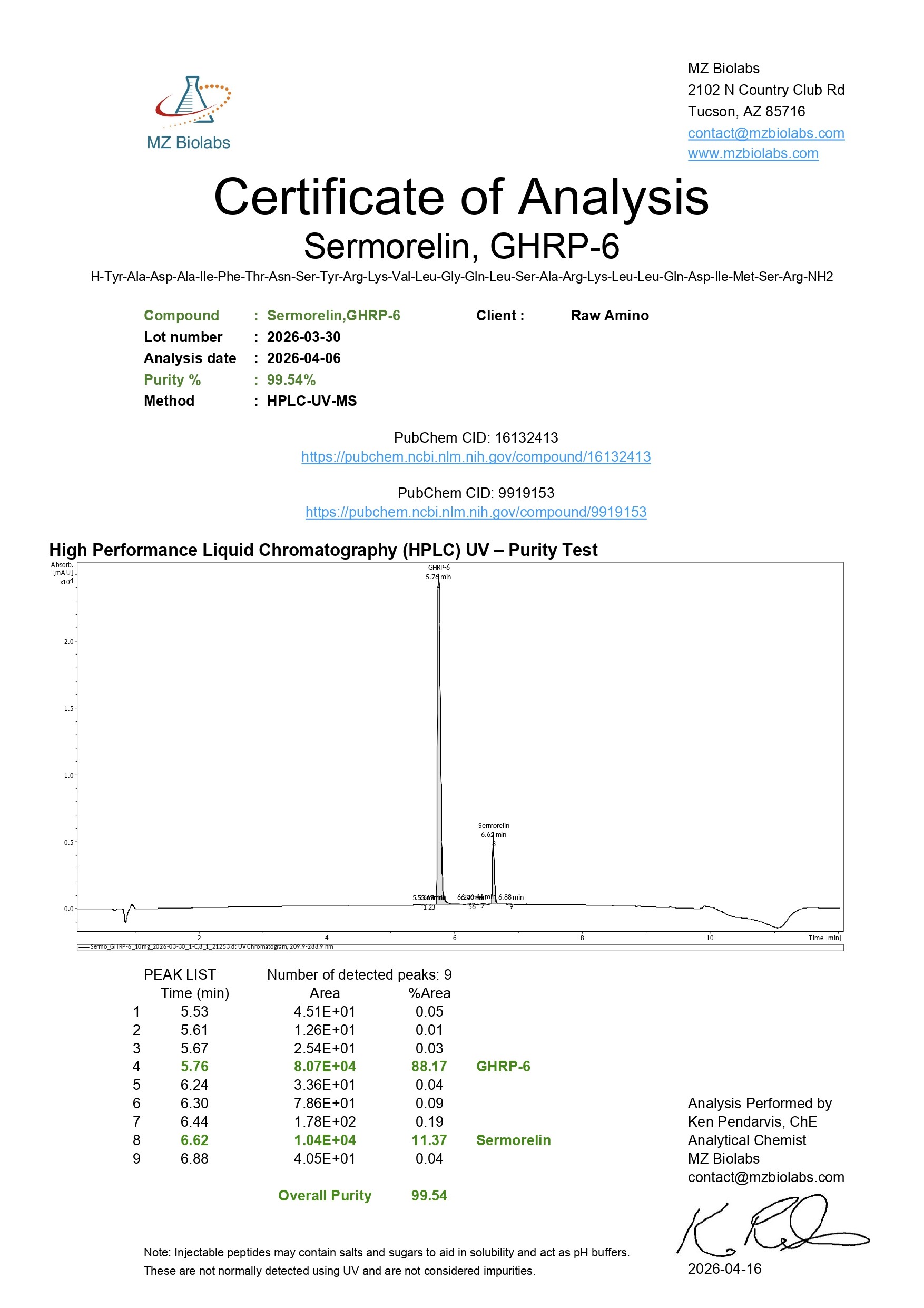
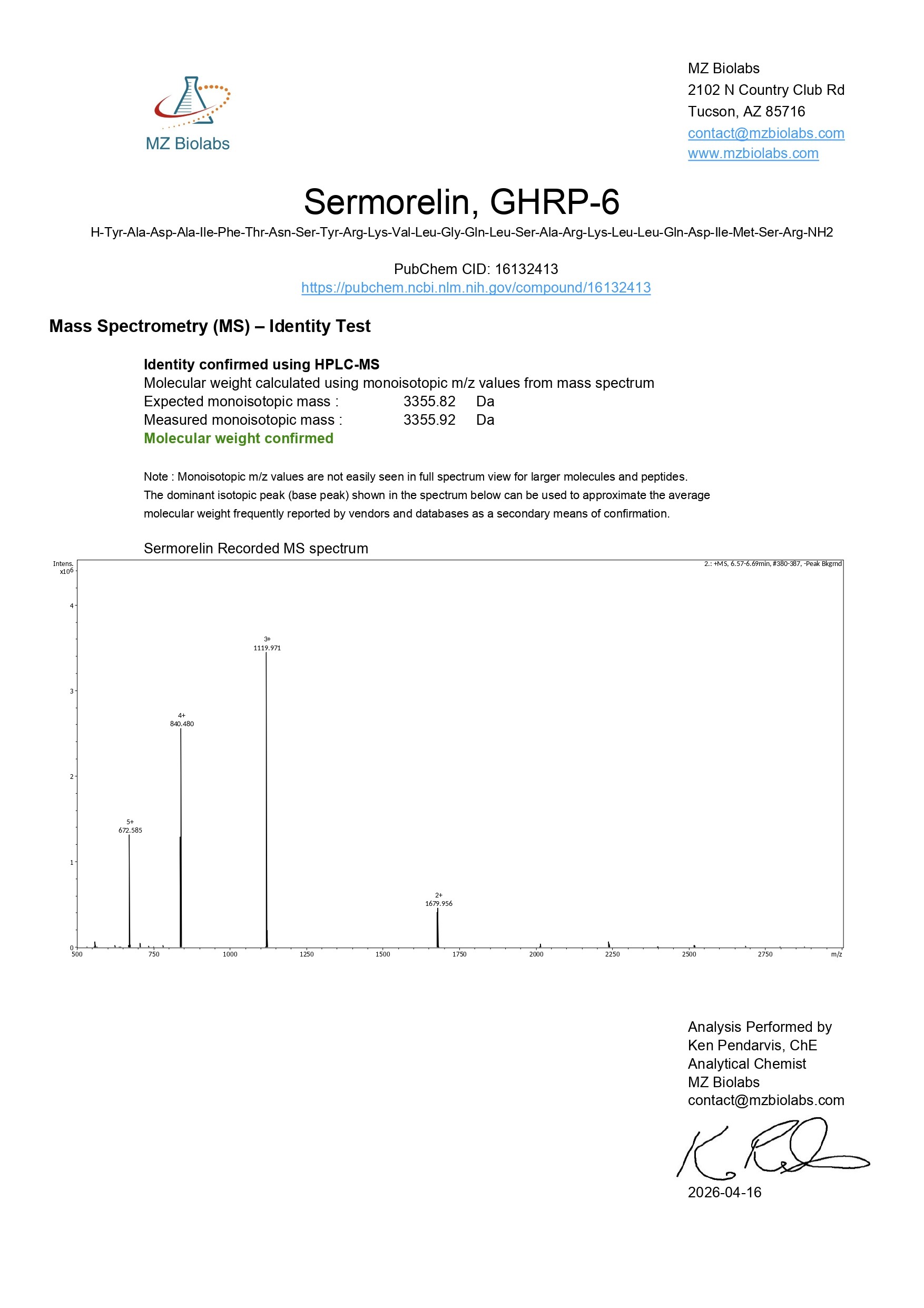
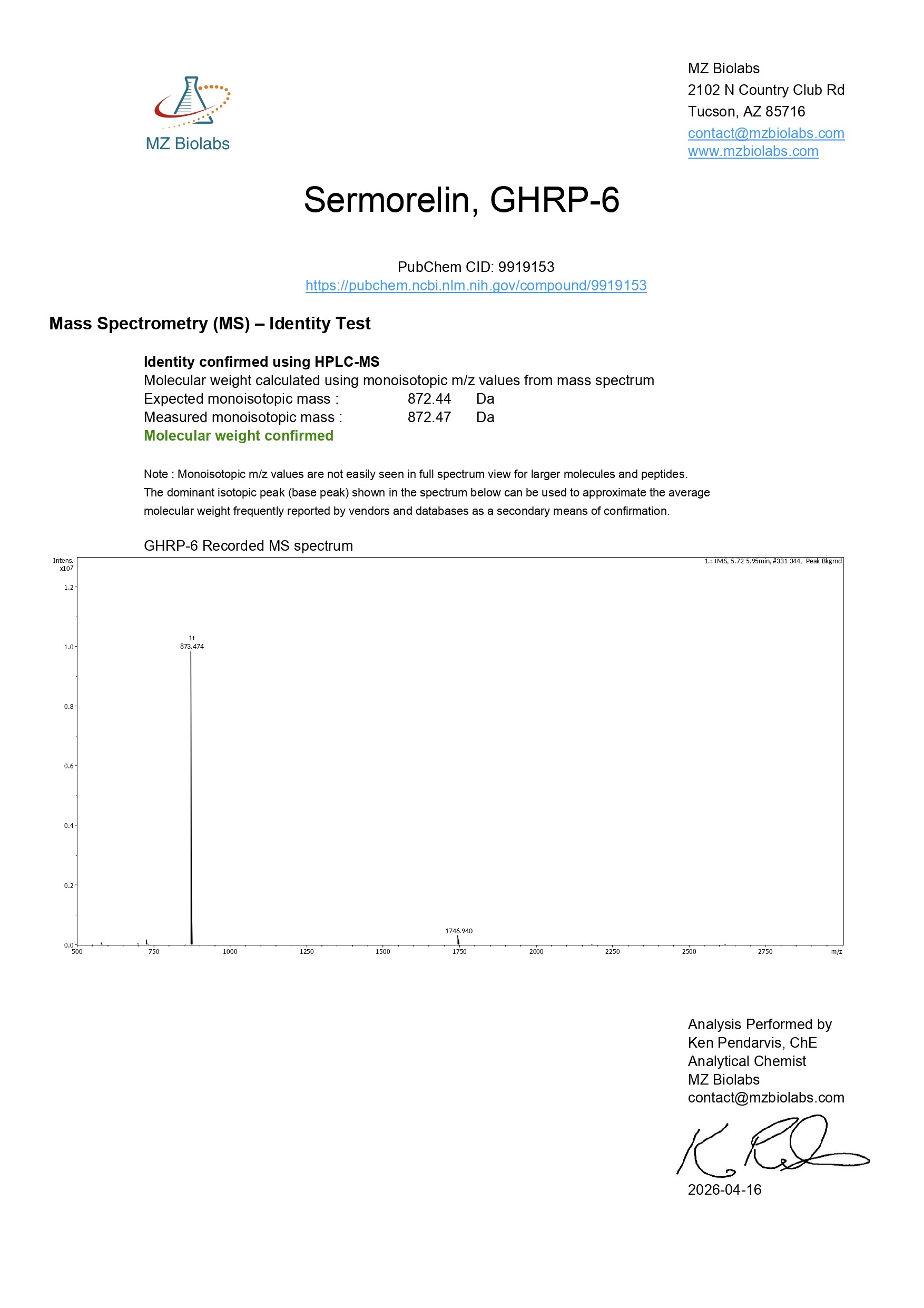
The Sermorelin & GHRP-6 Peptide Blend is a research-focused combination studied for its potential roles in growth-related cellular signaling networks. Sermorelin is a truncated analog of an endogenous releasing factor, while GHRP-6 is a synthetic hexapeptide examined for its interaction with receptor systems distinct from those targeted by releasing-factor fragments. Together, these peptides are frequently referenced in laboratory settings exploring hypothalamic–pituitary communication and multi-pathway peptide signaling.
Scientific literature proposes that each peptide may engage different upstream regulators. Sermorelin may interact with anterior pituitary receptors, whereas GHRP-6 appears to be linked with gastric-derived and centrally distributed receptor families. This dual-pathway interest has contributed to the growing use of this blend in research examining coordinated peptide activity, receptor crosstalk, and intracellular signaling frameworks. Although exact mechanisms remain unclear, the blend continues to attract attention in laboratories investigating peptide–receptor interactions.
Alternative Names: GRF(1-29); Growth Hormone Releasing Fragment; Growth Hormone Releasing Peptide-6; GHRP-6
Studies and Research Data
Receptor-Specific Signaling Pathways
Early experimental models have examined whether Sermorelin may activate anterior pituitary receptor systems while GHRP-6 appears to engage a separate receptor family associated with intracellular calcium mobilization and phospholipid signaling. When examined together, the peptides may demonstrate intersecting pathways that researchers suggest could represent synchronized receptor activation. These ideas remain theoretical, yet they form the foundation of many research approaches involving this blend.
Synergistic Laboratory Signaling Frameworks
Some investigations have highlighted the possibility that presenting both peptides simultaneously may yield patterns consistent with dual-pathway signaling. Reports in cell-based environments indicate that Sermorelin may influence cyclic nucleotide cascades, while GHRP-6 may contribute to alternative second-messenger activity. This combined presentation appears to interest researchers evaluating layered or cooperative signaling patterns.
Neuroendocrine Network Exploration
Preclinical studies frequently reference the blend when examining potential communication between hypothalamic and pituitary nodes. GHRP-6 has been linked to receptor activity in diverse tissues, suggesting wide receptor distribution, while Sermorelin has been studied more directly within anterior pituitary contexts. Combining the two provides researchers with a multi-receptor platform to explore overlapping neurosignaling environments.
Peptide-Coordinated Cellular Activity
Laboratory observations involving co-administration models propose that blends may exhibit broader signaling behavior compared to single-peptide presentations. Some frameworks suggest that the interaction of these peptides could influence intracellular mediators relevant to receptor activation and downstream transcriptional regulators. These ideas remain hypotheses and underscore the need for continued investigation.
Conclusion
The Sermorelin & GHRP-6 Peptide Blend is examined in research contexts for its potential roles in receptor signaling, neuroendocrine communication, and multi-pathway peptide interactions. Current scientific literature emphasizes early-stage model observations, and interpretations remain exploratory. While interest in this blend continues to expand across peptide research disciplines, all findings remain preliminary and require further study for mechanistic clarity.
References
- Muccioli, Giampiero, et al. “Heterogeneity of Ghrelin/Growth Hormone Secretagogue Receptors.” Neuroendocrinology, vol. 86, no. 3, 2007, pp. 147–64.
- Kojima, Masayasu, et al. “Ghrelin: Structure and Function.” Physiological Reviews, vol. 85, no. 2, 2005, pp. 495–522.
- Sigalos, Jason T., et al. “The Safety and Efficacy of Growth Hormone Secretagogues.” International Journal of Clinical Endocrinology & Metabolism, vol. 1, no. 3, 2017.
- Smith, Roy G., et al. “Growth Hormone Secretagogues: Prospects and Potential Pitfalls.” Best Practice & Research Clinical Endocrinology & Metabolism, vol. 18, no. 3, 2004, pp. 333–47.
Disclaimer:
The products mentioned are intended solely for laboratory research and in-vitro experimentation. They are not approved for human or animal use of any kind. All details provided are for educational purposes only. By purchasing from this site, you agree to comply with our Terms and Conditions.
Only logged in customers may leave a review.
Related products
-

GHRP-6 – 5MG/10MG
Price range: $30.00 through $41.00 Select options This product has multiple variants. The options may be chosen on the product page -
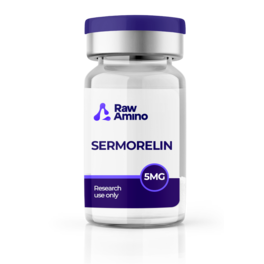
Sermorelin – 5MG
$46.00 Add to cart -
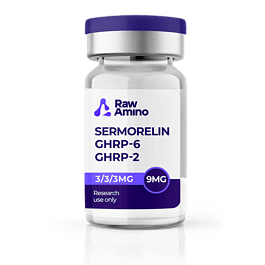
Sermorelin & GHRP-6 & GHRP-2 Blend – 9MG
$91.00 Add to cart
Related products
-
GHRP-6 – 5MG/10MG
Price range: $30.00 through $41.00 Select options This product has multiple variants. The options may be chosen on the product page -
Sermorelin & GHRP-6 & GHRP-2 Blend – 9MG
$91.00 Add to cart
Reviews
There are no reviews yet.